HYDROGEN.
Gaseous and Liquid Hydrogen are fast positioning their rightful place as significant future fuels.
The Fabrum Team have pioneered Hydrogen solutions that delivers the future today.
Read on for the fundamentals of this super fuel, details of how this looks for heavy transport and what’s to come with aviation.
HYDROGEN LIQUEFIERS.
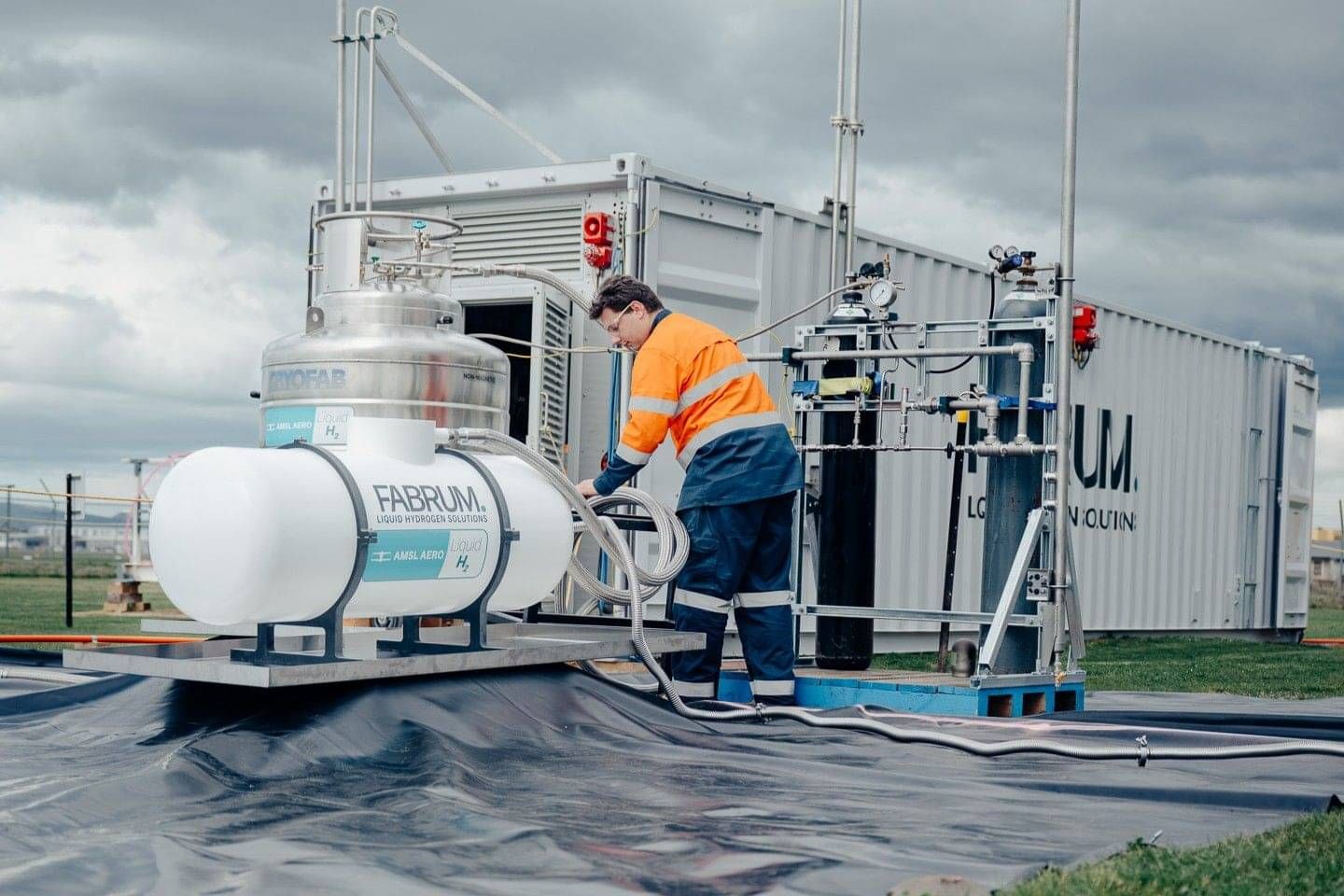
Drawing from a decade-long legacy in providing containerised cryogenics solutions worldwide, Fabrum’s HLQ Liquid Hydrogen Plants are designed for point-of-use liquid hydrogen production and boil-off gas management (BOGM).
Fabrum also provide state-of-the-art, retrofittable hydrogen re-liquefiers for BOGM of existing liquid hydrogen storage systems.
ATTRIBUTES:
3kg per day to 1 tonne per day
No sacrificial liquid nitrogen
Zero-loss systems
Rapid turn-up/turn down
Retrofit BOGM to existing storage vessels
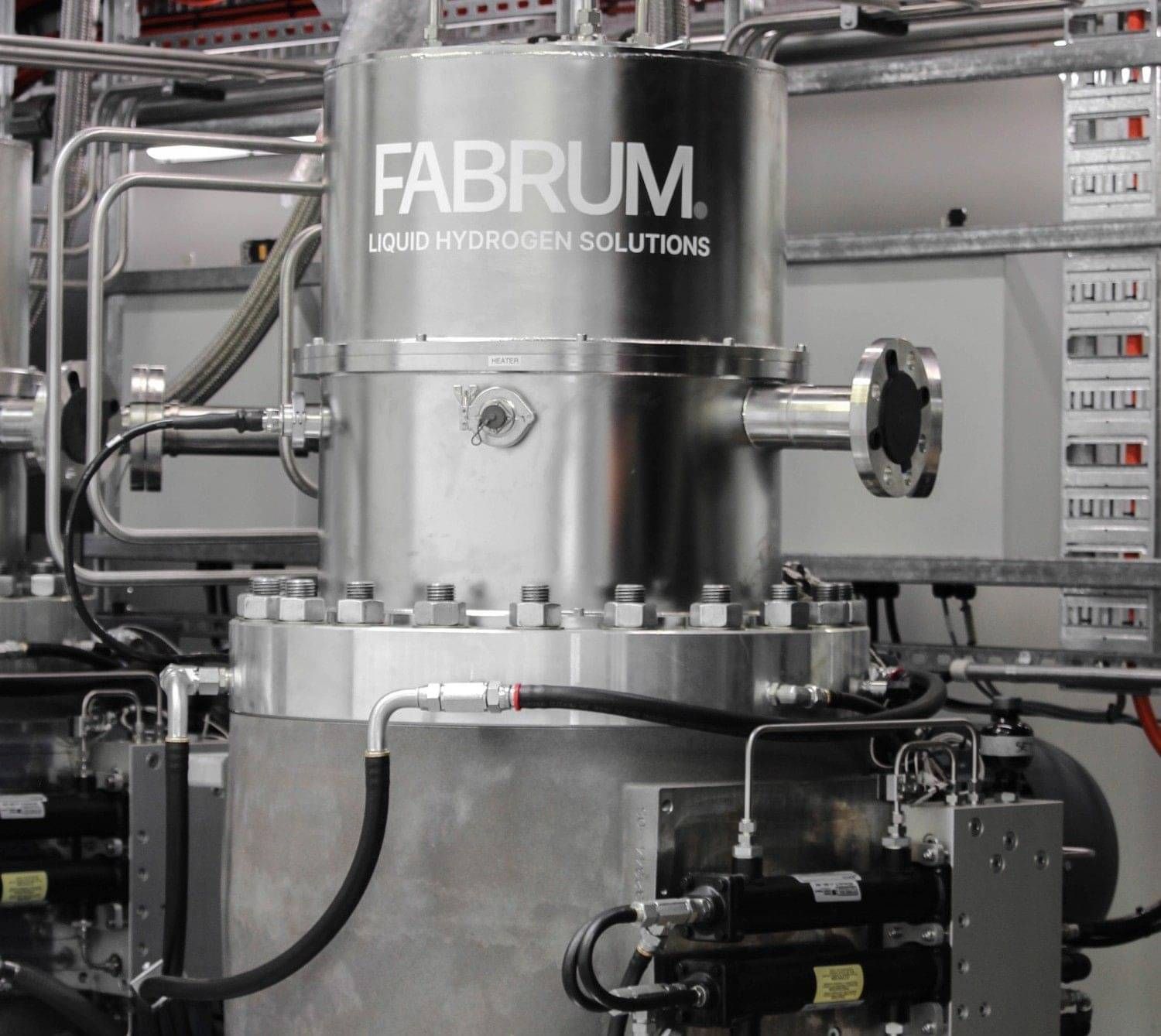
ONBOARD LIQUID HYDROGEN (LH2) STORAGE.
Fabrum’s proprietary triple-skin liquid hydrogen tank technology provides enhanced thermal insulation and fast refuelling. We build fully composite & fully metallic, stationary/on-board storage vessels.
Ground-based vehicle tanks with an outer metal skin are engineered for maximum durability, while aviation tanks are entirely composed of advanced composites, prioritizing the highest gravimetric index achievable and maximising thermal performance.
ATTRIBUTES:
70% faster refuelling
Proprietary Hydrogen Delivery System (HDS)
High gravimetric index
High dormancy period
HYDROGEN TEST FACILITY.
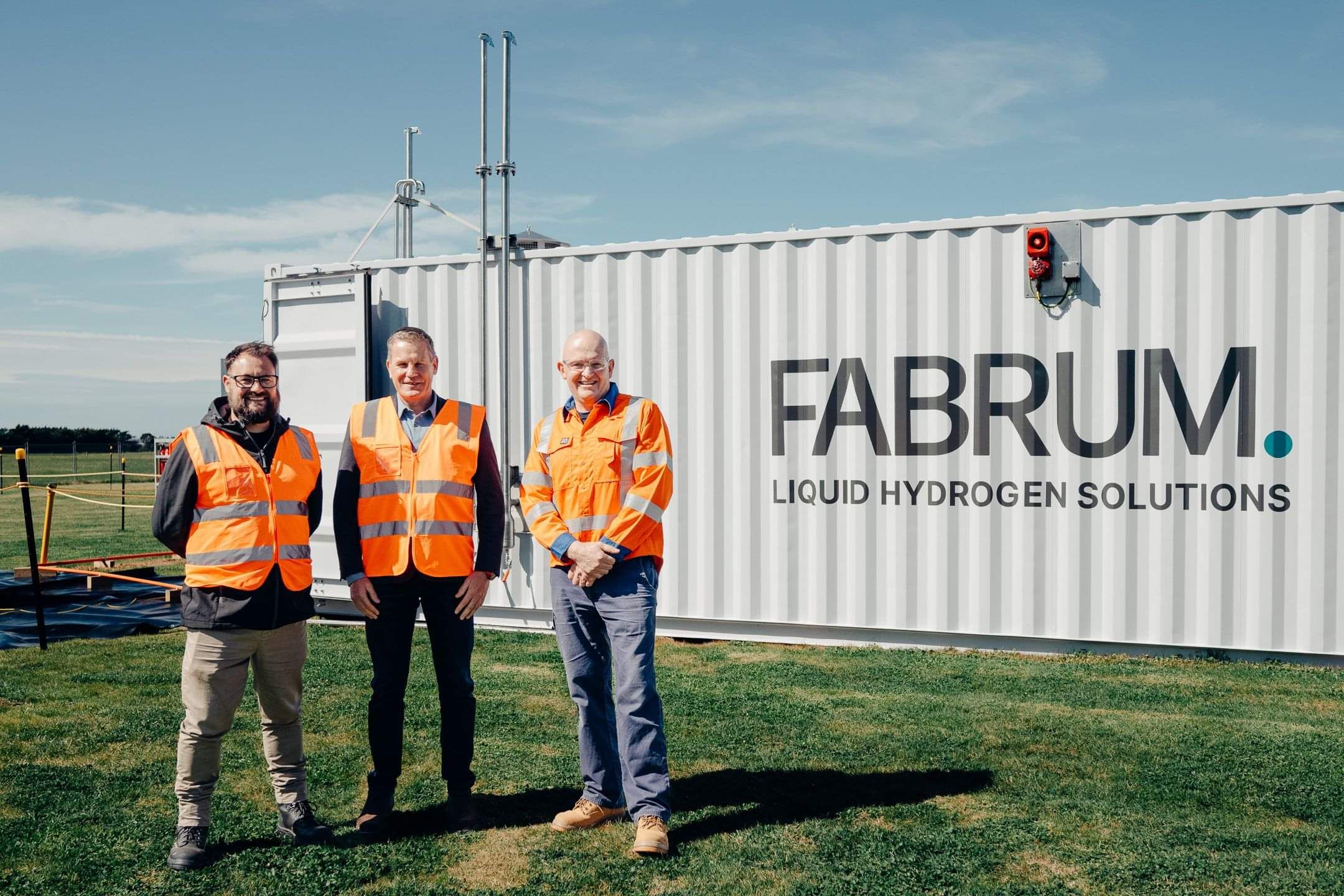
At Fabrum’s hydrogen test facility, we offer a comprehensive range of testing services designed to meet the diverse needs of our global clients. Our facility is equipped to handle both gaseous and liquid hydrogen testing, ensuring the highest standards of safety and accuracy. Our clients can conduct material testing to evaluate the compatibility and durability of various materials in hydrogen environments, which is crucial for the development of reliable hydrogen infrastructure. Additionally, our fuel cell testing capabilities allow us to assess the performance and efficiency of hydrogen fuel cells. We also offer specialized testing for hydrogen storage systems, leak detection, and purity analysis, making Fabrum’s hydrogen test facility the ideal destination for all your hydrogen-related testing.
ATTRIBUTES:
Expert support and experience
Scalable and flexible by design
Strategic location – Christchurch International Airport
Safety-focused design and operation
Multi-project testing capabilities
Collaboration with industry and academia
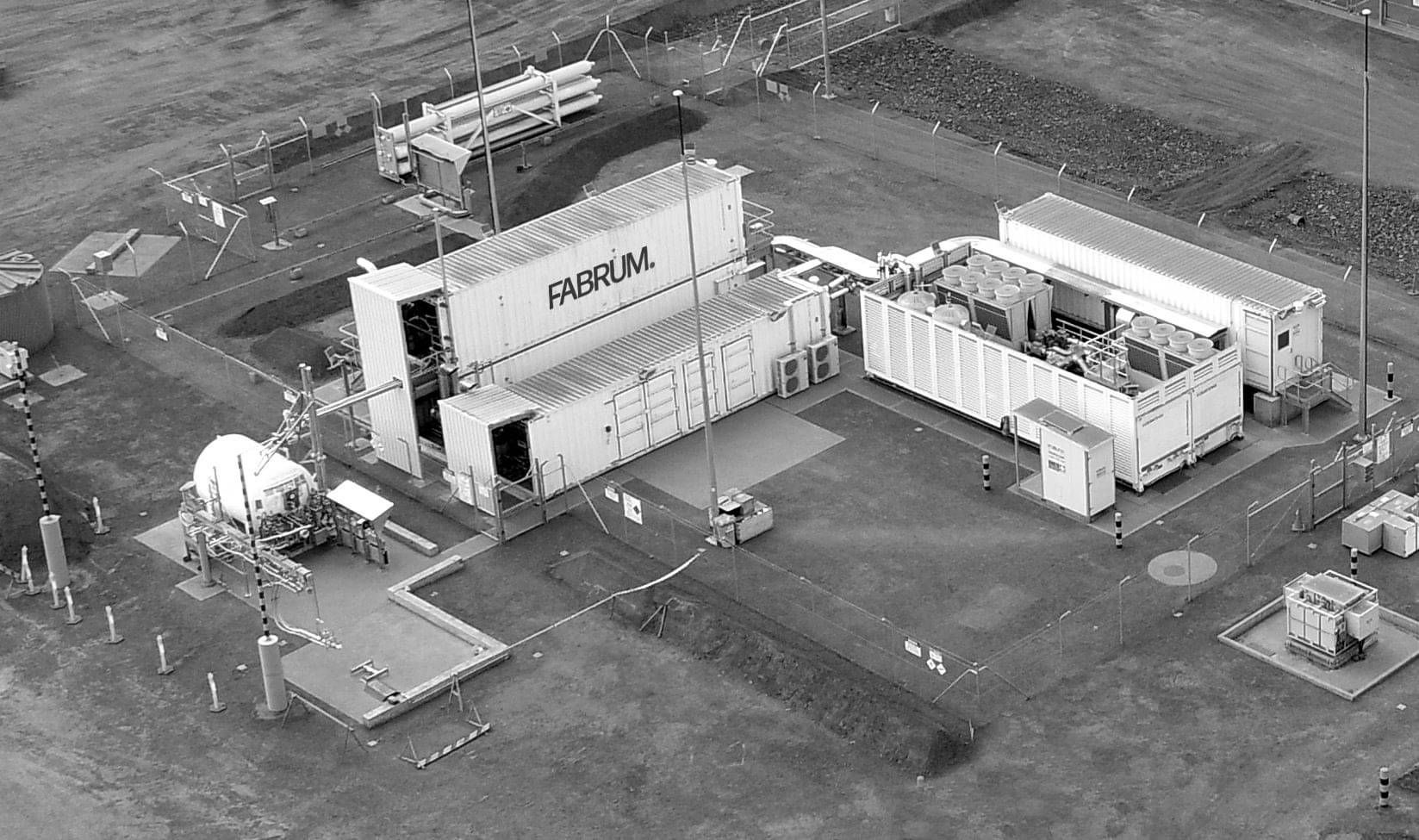
TURNKEY LH2 SOLUTIONS.
Our proprietary technology for boil-off-gas management and high-flow liquid transfer ensures minimum liquid hydrogen losses and maximum energy efficiency across the entire system.
We address every facet of liquid hydrogen management, from generation, liquefaction, zero-loss storage, high-flow liquid transfer and dispensing, controlled evaporation and temperature and pressure-controlled fuel cell delivery.
ATTRIBUTES
End-to-end solutions
Fast transfer and fuelling
Whole system energy optimisation
HYDROGEN FUEL STATION (GAS).
Fabrum manages the entire project lifecycle of your hydrogen refuelling station, from design and hazard assessments to procurement, construction and commissioning. Fabrum’s team of industry-experienced engineers and project managers, and strong relationships with major global players in hydrogen infrastructure delivery give us control over the entire value chain, ensuring that your project is delivered on time and to budget.
ATTRIBUTES:
On-site hydrogen production
350-bar and 700-bar refuelling
Scalable deployment
LH2 REFUELLING STATIONS.
Liquid hydrogen delivers superior energy density compared to compressed gaseous hydrogen, enabling more efficient storage and transportation, faster refuelling and reduced energy consumption during compression. As a world leader in the supply of small to medium scale liquid hydrogen systems, Fabrum provides hydrogen refuelling stations for public and private use in industrial or remote locations.
Liquid hydrogen refuelling stations allow for high-speed liquid refuelling as well as 350-bar and 700-bar gaseous refuelling without the need for a gas compressor or high-pressure storage on site.
ATTRIBUTES:
Hydrogen supply via on-site production or tube-trailer
Scalable deployment
350-bar and 700-bar gaseous refuelling
ELECTROLYSERS.
Fabrum, in conjunction with Clean Power Hydrogen (CPH2), supplies the patented membrane-free electrolyser. With no requirement for precious-metal catalysts, these electrolyser systems provide more robust operational parameters and far superior lifetime compared to other competitors.
ATTRIBUTES:
25 year operating lifetime
Cryogenic separation of Hydrogen from Oxygen
99.999% hydrogen output purity
No requirement for high-purity water feedstock
INDUSTIRES.
Currently we have R&D Hydrogen development projects internationally across Aviation, Marine, Heavy Transport and Heavy Industry.

AVIATION
The future of clean flight is dependent liquid hydrogen and optimised energy management. Zero-emission aviation is the future of sustainable flight. Fabrum is part of the Christchurch-based Hydrogen consortium, including Airbus, Air New Zealand, Christchurch International Airport Limited, and Fortescue Future Industries.
MARINE
Maritime applications and port services are target opportunities for adopting green hydrogen technology. Fabrum delivered the feasibility and design for Emirates Team New Zealand to execute the hydrogen-powered Chase Zero and works with New Zealand and global ports on decarbonisation strategies.
HEAVY TRANSPORT
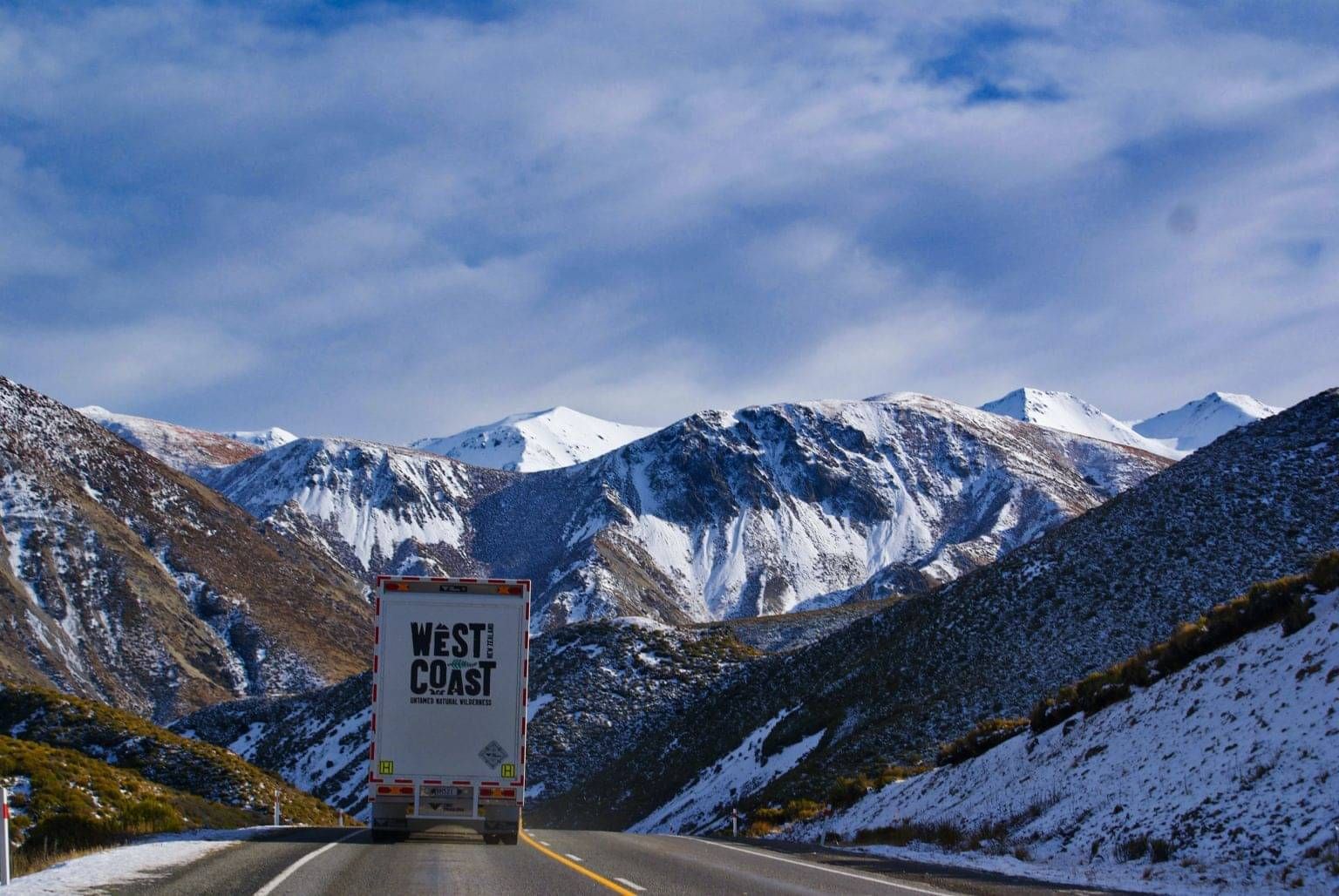
As a gas or liquid, green hydrogen is fast positioning its rightful place as a significant future fuel. For Heavy Transport operators, the transition process of dual fuel and the capability to fuel your fleet is fast becoming a reality. Our project with HW Richardson is an example of action and adoption.

HEAVY INDUSTRY
Mining, quarrying, and forestry are examples of mobile heavy industries where hydrogen is highly relevant and applicable as a fuel.
Fixed installations using hydrogen as a fuel for combustion, heat or power storage and generation will further decarbonise our economy to make the globe more sustainable.
FABRUM'S EXPERTISE IN HYDROGEN.
Fabrum is a well respected in the market as leaders in Hydrogen development, especially liquid hydrogen liquefaction storage and fuel tanks in small to medium size volumes.
This is our sweet spot with expertise in producing Liquid oxygen and liquid Nitrogen with the AFCryocooler range, it’s a natural step to now produce liquid Hydrogen from the gaseous form. This is where we like to play – deploying and combining our skills and IP in storage, fuel tanks and cryogenics.
NEW AND EMERGING INTELLECTUAL PROPERTY (IP) AND TALENT.
As a company we foster talent and have strong links with local engineering school at University of Canterbury and Ara Institute of Canterbury along with commercialisation of IP from research institutes.
MOVING TO A HYDROGEN-FUELLED TRANSPORT FLEET.
What is the first step?
We’re often asked “What’s the first step?” when starting the transition to renewable fuels for fleet operators across numerous applications. Heavy transport, maritime and aviation.
Over time the transition of diesel-fuelled vehicles fleets to Hydrogen fuelled vehicles will be complete. Dual fuels technology and retrofit options exist and provide an interim transition program for existing fleet assets.
Demand for total hydrogen fuelled assets currently outstrips supply, so transition options such as dual fuel are a pragmatic and sensible transition towards decarbonization for many operators wanting to lead the way.
HYDROGEN FUNDAMENTALS.
WHAT IS HYDROGEN?
Electrolysers split water into oxygen and hydrogen to generate ‘green’ hydrogen that’s zero-emission at both production and consumption, unlike ‘grey’ and ‘brown’ hydrogen.
WHAT'S THE DIFFERENCE BETWEEN BROWN, BLUE, AND GREEN HYDROGEN?
BROWN. Created by hydrocarbon-rich feedstock, such as fossil fuel, methane, coal. Creates as much CO2 as burning the fuel in the first place.
BLUE. Basically brown, but the CO2 created is then captured, and this must then be permanently stored somehow (a significant disadvantage).
GREEN. Uses 100% renewable energy to split water into hydrogen and oxygen. The oxygen output is also a key benefit of this process, with oxygen production being 8 times the mass of hydrogen produced.
IS HYDROGEN SAFE TO USE?
Hydrogen has similar safety requirements to natural gas (methane), and all modern hydrogen fuel cells, storage containers, and vehicles are designed with safety in mind for storage, transportation and refuelling.
WHAT CAN HYDROGEN BE USED FOR?
You can convert it to electricity using a fuel cell, and then power cars, ships, planes etc.
It can be added to natural gas and burnt in thermal power or district heating plants.
You can use it as a precursor for other energy carriers, from ammonia to synthetic fuels.
HOW DIFFICULT IS IT TO REFUEL MY VEHICLE?
Hydrogen refuelling is similar to refuelling with CNG. Simply drive up and refuel in a matter of minutes.
No significant downtime like EV.
HOW MUCH HYDROGEN DOES A CAR USE?
1kg for approximately 110 km.
HOW MUCH DOES A HYDROGEN BUS USE?
20-30 kgs per day.
HOW MUCH HYDROGEN DOES A TRUCK USE?
Around 8kgs for approximately 100km.
IS HYDROGEN HEAVIER THAN BATTERIES?
Hydrogen itself is 8 times lighter than a battery. So it depends on how you store it. For personal vehicles, hydrogen will have a similar weight, but a faster recharge/refuel time.
However, in large commercial vehicles that need a long-range hydrogen becomes a much lighter alternative.
WHAT IS THE ENERGY VALUE OF HYDROGEN?
Hydrogen has 8 times more usable energy than diesel for the same weight.



Mission Critical Solutions. Providing world leading solutions in engineering and cryogenic technology.
HOME
CRYOGENICS
HYDROGEN
BOGM
MANUFACTURING
ABOUT US
CONTACT US
APPLICATIONS
NEWS
CONTACT US
+64 3 982 2810
contact@fabrum.nz